Repairs · Clarington
Garage Door Tune-Up
Every morning the door announces itself to the whole street: a long metallic squeal as it climbs, a rattle at the top, and a groan on the way back down. It still opens and closes, but it never used to sound like this.
Garage Door Tune-Up
In plain words
What you receive from a tune-up is a door that runs better and a written picture of its condition. The technician records what was tightened, lubricated and adjusted, how the balance and reversal tests came out, and which parts are still healthy, which are worth watching and which have reached the point of a separate repair quote. That record turns the next visit into a comparison instead of a fresh start, and it lets you describe a new sound precisely when it appears. Maintenance and repair stay two different decisions, and you make the second one with the facts in front of you.
How the visit goesEvery morning the door announces itself to the whole street: a long metallic squeal as it climbs, a rattle at the top, and a groan on the way back down. It still opens and closes, but it never used to sound like this.
Clarington
How the visit goes
Rollers in their track
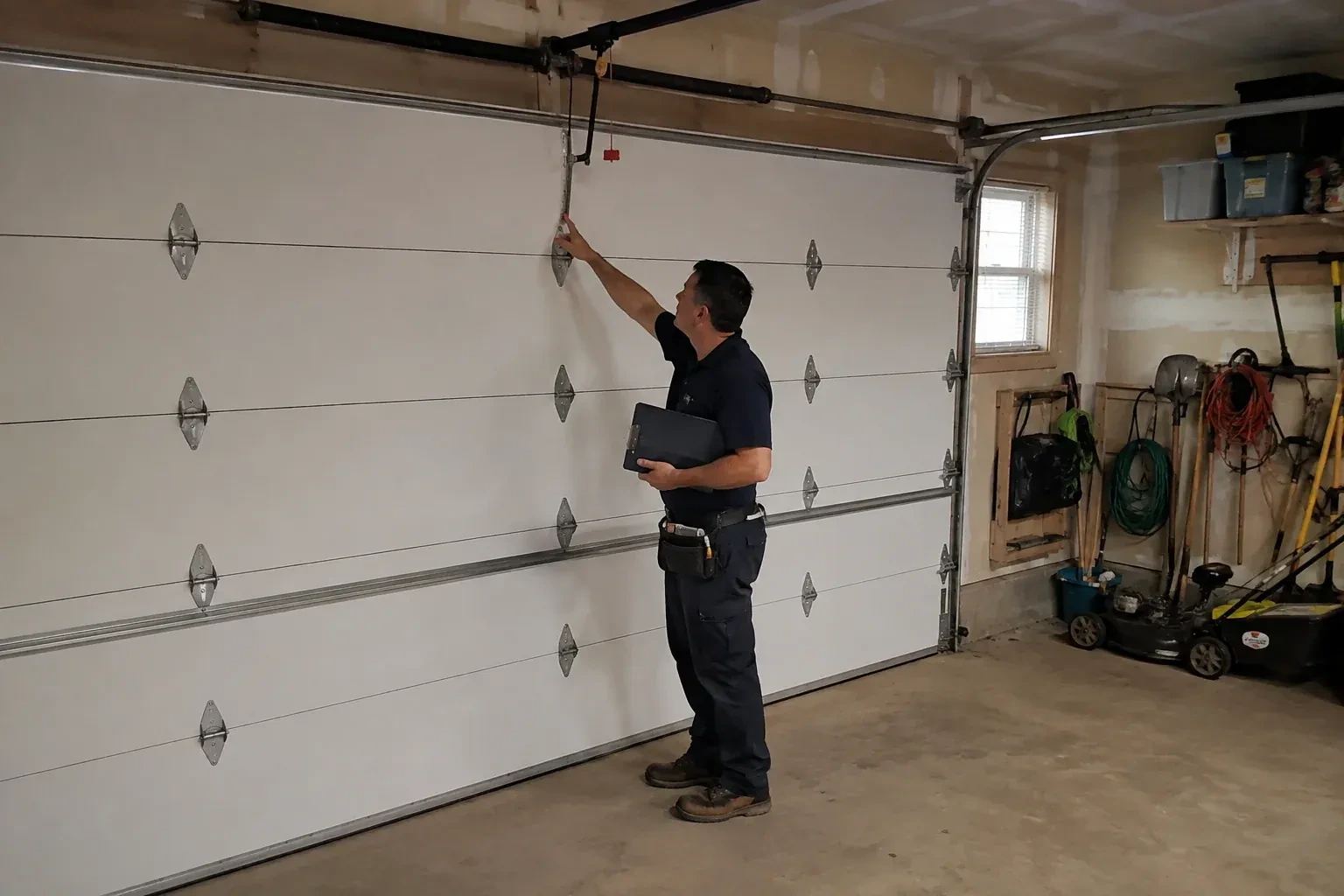
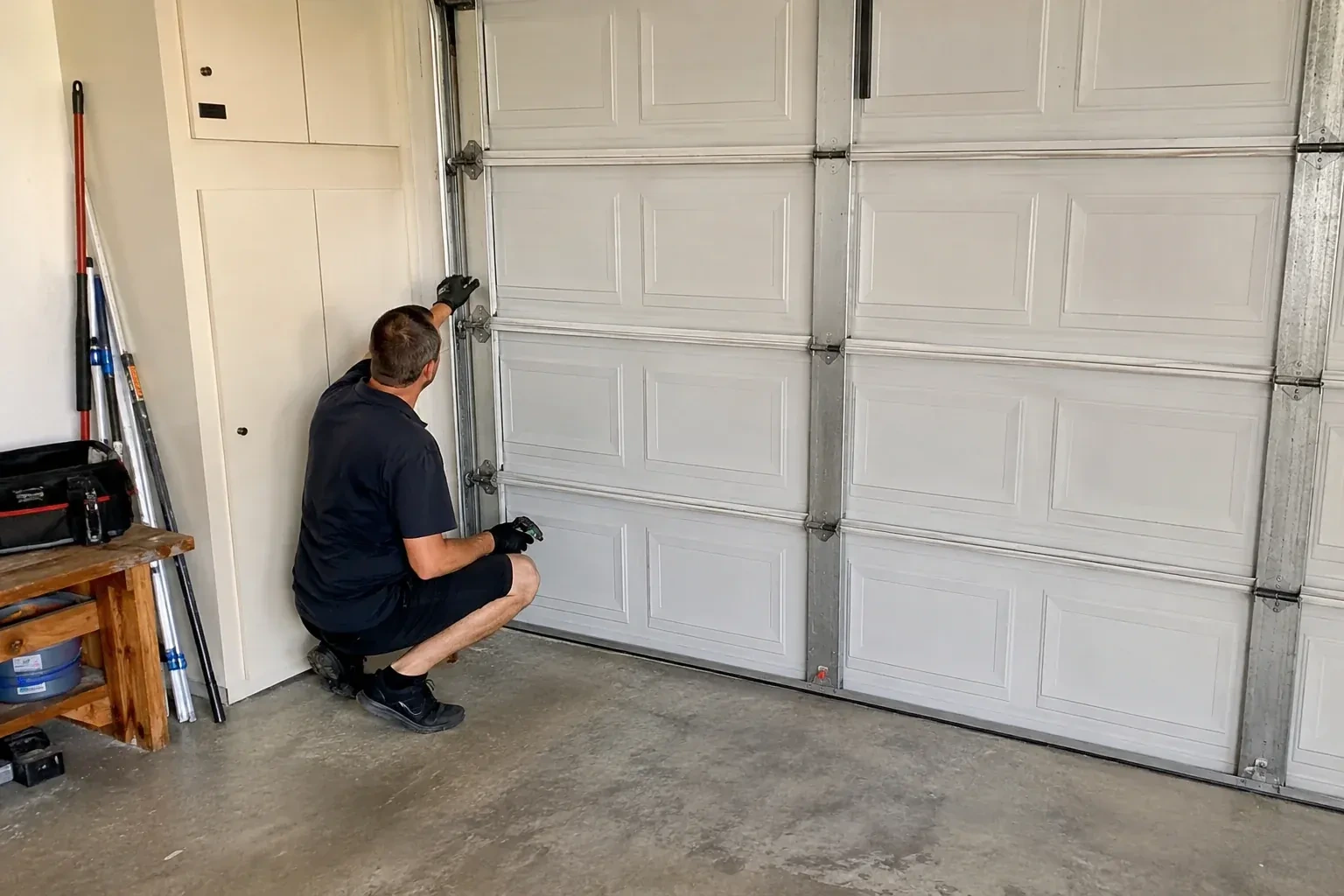
Rollers and track are read together. The technician looks at the wear pattern on the rollers, checks whether steel rollers have gone out of round and whether nylon ones are chipped, and confirms that each roller sits fully in the track with its stem seated in the hinge. The vertical tracks are checked for plumb and for the small gap that should exist between the roller and the track wall, since a track that has been pulled tight against the door makes the rollers drag. The curved and horizontal sections are inspected for dents, loose hangers and the grit that accumulates at the bend. A clean, straight track with rolling rollers is what a smooth door is made of.
Setting travel and force on the opener
The opener has two settings that drift over time: how far the door travels, and how much force it applies before deciding something is in the way. The technician runs the door and adjusts the down travel so the door seals firmly on the floor without bowing the top section or crushing the seal, and the up travel so it stops fully open without the trolley hitting the stop. Force is set as low as will reliably close the door, because a low force setting is what lets the door reverse gently on contact. On a sectional door the arm is kept from passing straight up and down at the closed position, which protects the top section and the rail.
A door you hear less and trust more
The most noticeable change is the sound. With the hinge pins and roller bearings lubricated and the loose hardware tightened, the squeal and the rattle that woke the household are gone or reduced to a low hum of rollers in a clean track. The door starts without the shudder and lands on the floor with a soft contact instead of a slam. Because the technician ran the same cycle before and after the work, you can hear the difference for yourself before they leave, and the sounds that remain, if any, are explained: what they are, which part they come from and whether that part is worth replacing now or watching for a season.
Garage Door Tune-Up
In the van
- 2x4 test block and tape measure
- Silicone spray for seals
- Bottom seal (astragal)
- Replacement steel or nylon rollers
- Socket set and drivers
What affects the quote
Same fees day, night or weekend
1Torsion or extension springs
Torsion springs above the header and extension springs beside the tracks are inspected differently, and extension systems have pulleys and safety cables that add items to the checklist.
2Age of the door and opener
Older hardware may need fasteners in sizes no longer standard, and an opener without photo-eyes prompts a conversation about entrapment protection that is quoted separately from the tune-up.
3Track alignment
Tightening track bolts is included. A track that has been pulled out of line or dented by a vehicle needs straightening or a section replaced, and that is quoted as its own repair.
Garage Door Tune-Up: questions
Which lubricant is right for a garage door?
A silicone-based or white lithium garage door lubricant, sold for the purpose. Penetrating oils and general sprays are thin, attract dust and are gone in weeks; heavy grease traps grit. For the rubber bottom seal and weatherstrip, use only a silicone spray, since petroleum products attack rubber and make it brittle. Nylon rollers with sealed bearings need no lubricant, while ones with an exposed bearing can need a touch where their own maker calls for it. A small amount on each point, worked in by moving the door, is enough.
How often should a garage door be tuned up?
Once a year suits most attached garages here, ideally in the fall before cold weather thickens lubricant and stiffens seals. Door and opener makers suggest lubrication every three to six months and a homeowner balance check and reversal test every month, so an annual professional visit sits on top of that light routine. A lightly used door in a detached garage may go longer; a heavily used one, or one exposed to salt spray, benefits from a spring check too.
Should I lubricate the tracks?
No. Tracks should be clean and dry. Rollers are meant to roll along the track on their own bearings, and a film of lubricant on the track collects grit, thickens in the cold and makes the rollers slide and drag instead. Wipe the tracks with a rag and put the lubricant where it belongs: on the hinge pins, the roller bearings, the spring coils and the bearing plates at the ends of the torsion shaft.
Repair & Maintenance
- Off-Track Garage Door ResetThe rollers on the door have been squealing for months.
- Garage Door Panel ReplacementFrom outside, the horizontal groove between two sections now steps sideways by a centimetre.
- Garage Door Bottom Seal ReplacementThe gap under the door is a finger wide at one end and nothing at the other.
Garage Door Tune-Up near you
From a stuck door on a winter morning to a planned replacement before the house goes on the market, the services on this page cover what garage doors in Clarington typically need. Each one explains what is checked, how the work is done and what you can expect afterwards.