Repairs · Clarington
Garage Door Safety Inspection
You moved in three months ago. The door works, but nobody can say how old the springs are, when anyone last looked at it, or whether the little sensors by the floor have ever been tested.
Garage Door Safety Inspection
In plain words
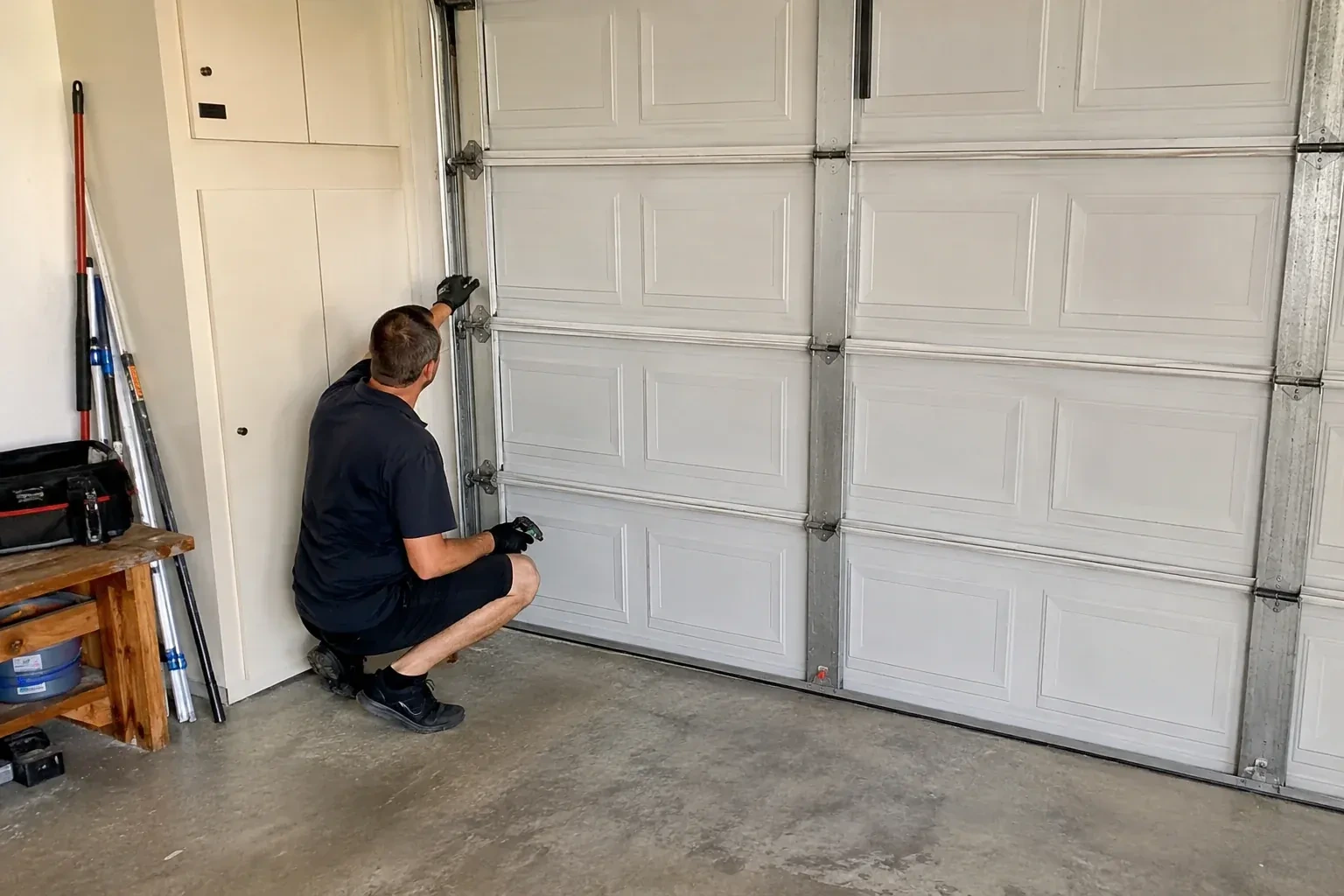
For a home you have just bought, or one you are about to sell, the inspection gives the door a starting point. The report records the door and opener models, the spring type, the condition of every wearing part and the results of the balance and safety tests, all against a date. Anything that needs attention is listed with a suggested order. From then on you have something to compare against: a noise that appears next year means something changed since the record, not a mystery, and a buyer or an insurer asking about the door gets a factual answer instead of a shrug.
How the visit goesIt has been a hard winter. The bottom seal froze to the slab twice, the opener groaned each morning, and one afternoon you noticed a cable on the left side hanging with a little slack in it.
Clarington
How the visit goes
What you have noticed, and when it started
You are part of the assessment. The technician asks when the door last felt normal, what the first change was, whether a sound comes on the way up or the way down, and whether anything happened just before: a bump from the car, a heavy snowfall, a power cut, a new remote. A door that got noisy over a year and a door that changed overnight are different stories, and the second usually has a single cause. Previous repair paperwork, the door's manual and any photos from when the house was bought are all useful. This short conversation tends to shorten the search and adds context to the report that a checklist alone would miss.
Maintenance done on the spot, if you wish
Some findings are simply maintenance, and with your agreement the technician handles them during the same visit. A garage-door lubricant is applied to the springs along their length, to hinge pins, roller bearings and bracket pins, then the door is run to spread it. The tracks are wiped clean and left dry. Photo-eye lenses are cleaned and aligned, loose fasteners tightened, remote and keypad batteries replaced. None of this touches the counterbalance tension or the opener's force settings; those are noted for planned work. It adds a few minutes to the visit and it means the door goes back into service better than it was found.
A baseline for the next inspection
The most useful thing about a first inspection is the second one. With the model numbers, spring dimensions, cable condition, seal gaps and photo-eye heights on record, the next technician can measure the same points and tell you what has moved rather than starting from nothing. For most households an annual visit fits, with a look in early spring after the salt season a natural choice. A door that carries a lot of traffic, an older door, or one in a rental where nobody watches it closely may suit a check each season. Whatever the interval, the report you are holding is the reference the next one will be read against.
Garage Door Safety Inspection
In the van
- Spring and cable gauges
- Flat 2x4 test board
- Inspection checklist and report form
- Replacement hinge and track fasteners
- Tape measure and level
What affects the quote
Same fees day, night or weekend
1A retest after repairs
When the report lists repairs, a short return visit to rerun the balance, reversal and photo-eye tests once the work is done is quoted as its own item.
2Findings that change the scope on the day
If a stop-use item turns up, securing the door and explaining the correction takes extra time on the visit. That, and any work you approve, is quoted separately before it starts.
3Single or double door
A double door is wider and heavier and commonly adds centre hinges and reinforcement a single door does not carry, with a heavier counterbalance to test, so it takes longer to walk and to write up; section count itself follows the door's height rather than its width.
Garage Door Safety Inspection: questions
How should I prepare for the appointment?
Move the car out if you can and clear a metre or so in front of the door and along both tracks so the technician can reach the hinges and brackets. Find the door and opener manuals and any earlier repair paperwork. Have every remote and the keypad code to hand. If something has changed lately, be ready to say when and what you noticed first. If the door looks wrong, leave it where it is.
What gets lubricated, and what is left dry?
The moving metal-on-metal points get a light coat: the spring coils, the hinge knuckles, the roller bearings and the pins at the bottom brackets. A silicone or lithium product made for doors is used, then the door cycles a few times to carry it in. The tracks are the exception; they are cleaned and left bare, since a slick track lets the wheels skid and holds grit against them.
What happens if the report lists a stop-use item?
The door is parked in a safe position, usually closed, with the opener disconnected so nobody runs it by habit, and the reason is shown to you. The correction is explained and quoted as its own piece of work, and once it is done the door is retested through the balance, reversal and photo-eye checks before it goes back into daily service. Another door into the house or garage is used in the meantime.
Repair & Maintenance
- Off-Track Garage Door ResetThe rollers on the door have been squealing for months.
- Garage Door Panel ReplacementFrom outside, the horizontal groove between two sections now steps sideways by a centimetre.
- Garage Door Bottom Seal ReplacementThe gap under the door is a finger wide at one end and nothing at the other.
Garage Door Safety Inspection near you
From a stuck door on a winter morning to a planned replacement before the house goes on the market, the services on this page cover what garage doors in Clarington typically need. Each one explains what is checked, how the work is done and what you can expect afterwards.