Springs · Clarington
Extension Spring Replacement
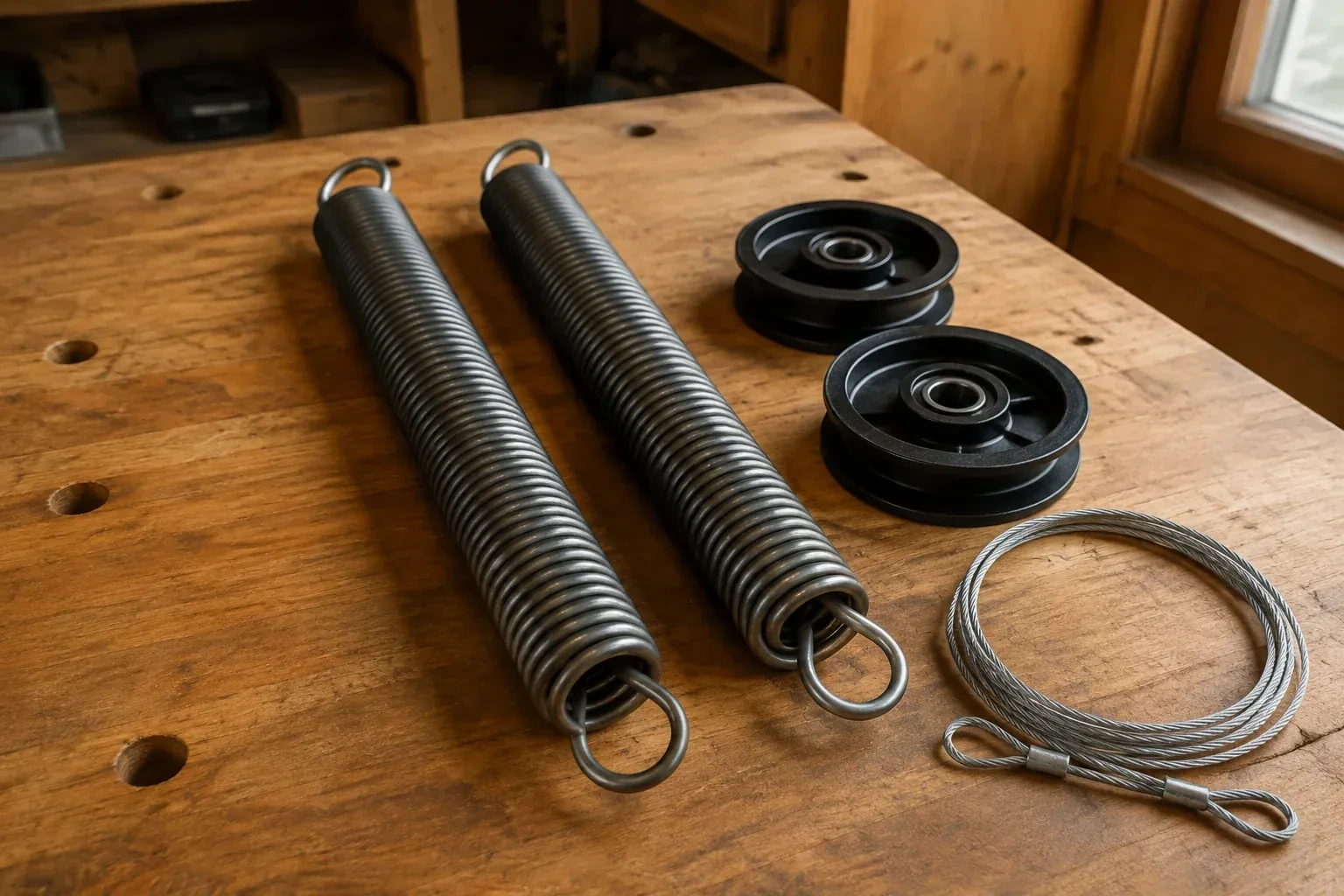
A bang like a dropped toolbox came from the garage last night. This morning one of the long springs beside the track hangs in two pieces, and the door will only rise a few inches before the opener gives up and stops.
Extension Spring Replacement
In plain words
What you have afterwards is a door that behaves like a much lighter object. Both corners leave the floor together, the door holds still when you stop it at waist height, and it settles onto the floor instead of slamming. The opener runs quietly, because it is guiding a balanced door rather than hauling a heavy one, and its safety reversing works as designed. Both springs are new, both carry a containment cable, the pulleys turn freely and both S-hooks sit in the same hole. You also get the spring rating and door weight written down, so the next set can be ordered without measuring everything again.
How the visit goesA bang like a dropped toolbox came from the garage last night. This morning one of the long springs beside the track hangs in two pieces, and the door will only rise a few inches before the opener gives up and stops.
Clarington
How the visit goes
The rest of the door, and why the spring went
A spring rarely fails on its own, so the first look ends with the door it was lifting. The technician checks the rollers for cracked wheels and bent stems, the hinges for splits, the track for a bend or a bracket pulled off the jamb, and the bottom section for a dent that catches. The opener's force setting is noted, since an opener turned up to compensate for tired springs will overpower the new ones. And the history matters: a door recently fitted with insulation panels or windows weighs more than the springs were chosen for, and a door that has been closed onto snow or a bin has had its cables jolted.
Setting both sides to the same hole
The initial tension is set with the door open and clamped, so the technician is adjusting slack springs rather than loaded ones. Each cable's S-hook is placed in a hole on the hanger, or its clip set to a mark, and the two sides are put at the same position. The cables are drawn to the same snugness so that neither corner of the door is being pulled ahead of the other. A level across the top section confirms the door is square in its tracks. Only when both sides read the same do the clamps come off and the door come down for its first balance check.
A clear threshold and an honest opener
Two habits protect the new springs from the shocks that shorten a spring's life. The first is the floor: a door that comes down on a bin, a bike wheel or a ridge of packed snow stops short while the springs and cables are still pulling, and the jolt can throw a cable off its pulley. Keep the opening clear and scrape the ice ridge off the threshold before running the door in winter. The second is the opener's force setting. It was set for the newly balanced door; if the door ever seems to need more push, that is the springs asking for attention, not a reason to turn the force up.
Extension Spring Replacement
In the van
- Extension springs, matched pair
- S-hooks and adjusting clips
- Bottom brackets and clevis pins
- Pulleys (sheaves) and forks
- Garage-door spray lubricant
What affects the quote
Same fees day, night or weekend
1Weight added since the door went in
Insulation panels, windows or a wood overlay fitted after the original springs mean a heavier rating than the old pair. The door is weighed and the quote reflects the door as it is now.
2Working room around the springs
Shelving, a stored canoe or a car parked under the tracks slows the work along the horizontal run. Clearing the sides of the garage beforehand keeps the time on the quote short.
3Getting the van to the garage
A detached garage down a shared laneway, a rural property or a building with the bay behind a gate takes more time to reach and set up in, and the quote allows for that.
Extension Spring Replacement: questions
What happens during the visit?
The technician releases the opener, opens the door fully and clamps it so the springs go slack, then inspects springs, pulleys, cables, hangers and containment cables and weighs the door. The old springs come off, a matched pair goes on with containment cables through them, the lift cables are routed over the pulleys and the two sides are set to matching hook positions. The door is balanced by hand, the opener reconnected and its reversing tested with you watching.
What is a safety cable, and does my door need one?
A safety or containment cable is threaded down the inside of each extension spring and fixed at the hanger behind and the bracket in front. It carries no load in normal use. If a spring snaps, the cable keeps the broken halves in place beside the track. Every extension-spring door should have one each side, and the industry's inspection checklist asks for it. Doors installed decades ago often have none; they are added with the new springs.
Is it all right to keep shelves and storage near the springs?
Keep a clear zone around them. The springs, pulleys and cables move on every cycle, and anything leaning into their path, such as a ladder, a hockey bag or a shelf edge, can catch a cable or knock a pulley. Storage that crowds the rear hangers also slows any future service. A hand's width of clear air around each spring's full travel, and nothing hung from the springs or their cables, is the rule of thumb.
Springs & Hardware
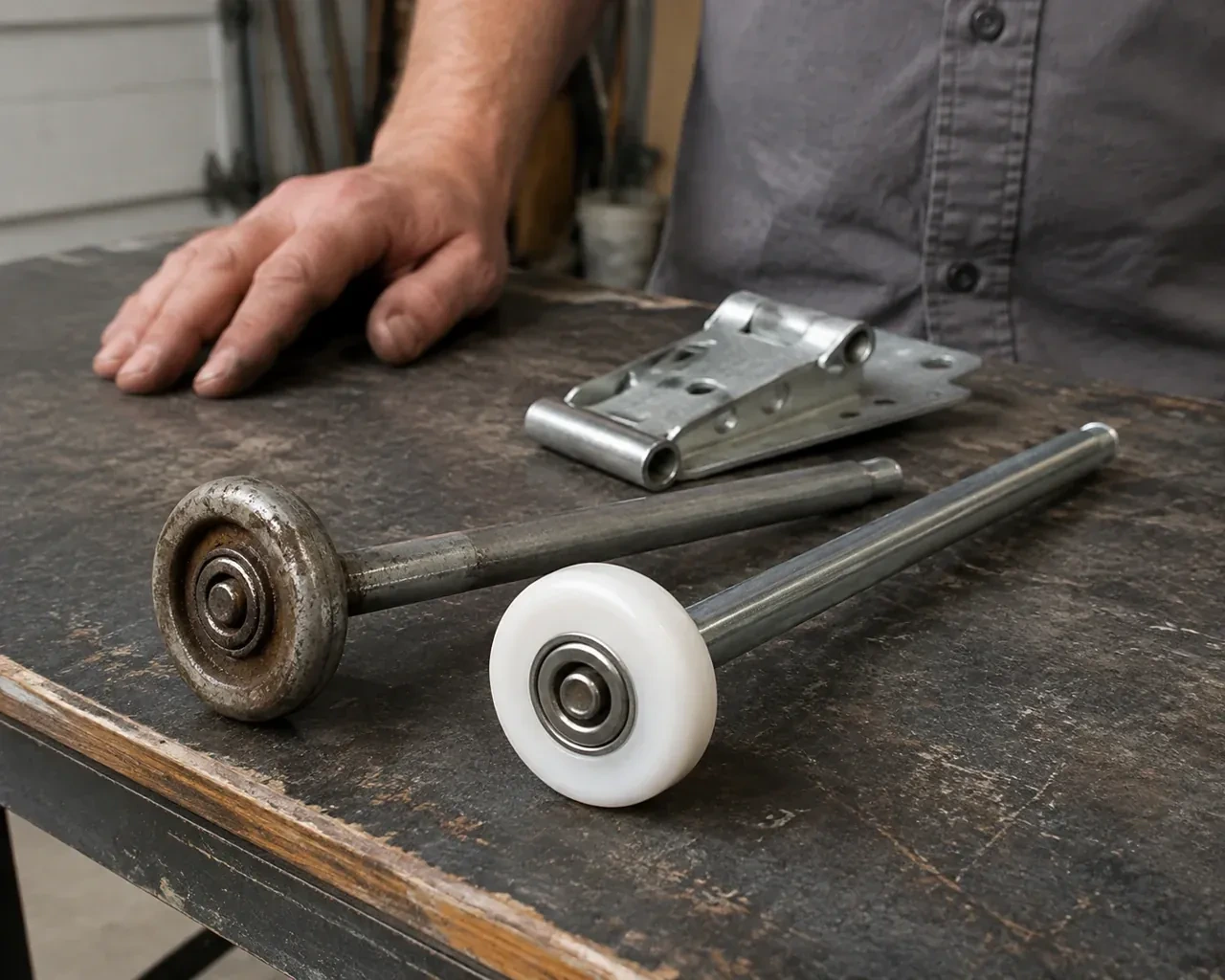
- Garage Door Hinge ReplacementAfter a cold night the bottom seal had frozen to the slab.
- Garage Door Track Repair or ReplacementBacking out this morning, the mirror caught the track beside the door.
- Garage Door Cable ReplacementThere was a sharp crack from the garage, and when you went to look the door had dropped on one side…
Extension Spring Replacement near you
From a stuck door on a winter morning to a planned replacement before the house goes on the market, the services on this page cover what garage doors in Clarington typically need. Each one explains what is checked, how the work is done and what you can expect afterwards.